
By Tawanda Mthintwa Hove
The recent rise of unemployment in Southern Africa to an approximate average of 60% is cause of concern which needs urgent attention by all stake holders involved in the job creation business. Whilst government and other instrumental organisations have a responsibility to play, it is an undeniable fact that youths themselves have to create employment for themselves. Considering the abundance of land on both commercial and communal level, youth have a genuine option of practising farming as a business. The greatest challenge most farming enterprises have especially in Zimbabwe is that they lack a business orientation which will see them grow and become sustainable going concerns.
Before one goes further in illustrating on how youth can practise farming as a business, it is of paramount essence that one clearly defines what farming as a business actually means. Farming as a business simply refers to the practice of any agricultural activity with the diliberate intent of being competitive and obtaining a return on investment on the capital employed to undergo that venture. In simple terms, it is farming with the intention to make a profit. When carefully structured, farming enterprises can yield up to 70% margins a classic example being tobacco farming which has high returns especially in Zimbabwe.
For one to consider his farming enterprise as a business, they are vital business basics that one should be aware of which are the business equation, its components and how to adjust operations focussing on the business equation. The business equation is as shown below:
Profit=Revenues- Expenditures
When one manages his farm operation, they are two critical issues which they should be concerned about which are simply revenue and expenditures.
Revenues
Revenues refer to the money generated from selling the produce of the farm enterprise. One major pitfalls of Southern African youths is that they jump into doing a farming venture without carefully identifying a market, being clear on how they are going to compete for customers and how long will their strategies will be sustainable. A classic example is poultry farming in Zimbabwe. During the 2010 to 2011 people there was a population of peri urban poultry growers in particular in Harare. A survey done in Zimre Park which is a surburb in Harare showed that more than 200 residents were doing poultry farming. Five years that number has dwindled by 50% and the reason for the decline being a lack of market security. In essence, farming as a business require the farmer or entreprenuer to identify a market gap, or a person or institution in which the enterprise can realistically compete for. An example would be entering a forward contract with a school at an agreed price and quality and quantity specification. The producer can at least begin production with clarity of the relationship between the income and the expenditure. In other words, they should be few surprises at the time marketing the produce with regards to prices and market availability. In short, begin by finding a market!
Costs/ Expenditures
For the business to realise a profit, the revenue has to exceed the costs. The costs are simply the expenditures incured to sustain the business. Such costs may vary in terms of fertiliser. stock feed, premises rentals etc. Costs have to be periodically monitored as the more they rise the lower the profit will be realised. Whilst primary production costs are not always easy to minimise, secondary costs such as transportation can be minimised by strategic collaborations. An example would be shared transportation to the market for farmers located in the same area serving the same market. The case of market gardening in Domboshava is a good example. Since most growers sell their tomatoes in Mbare Market, it is noble to assemble as groups and then share the discounted costs as the barganing power is stronger collectively as oppossed to individually.
As a first fundamental, youths should be aware that in order for the enterprise to be sustainable in the long run, profits have to be realised. These profits can only be realised when the enterprise owner is either thinking of innovative ways of increasing revenue or minimising costs.
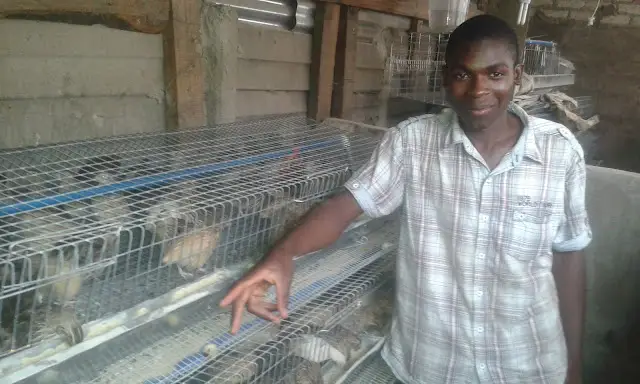
Mthulisi Gumbo- a youth farmer starting to practise the concept of farming as business thanks to consultancy with Windmill’s free consultancy department.