
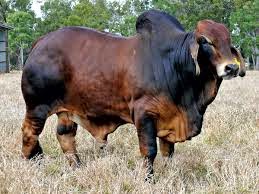
Beef fattening in Zimbabwe has financial rewards if done correctly. This article serves to give you guidance on how best to it. Beef prices normally changes with season and higher prices are realized for good grades during the dry season when most animals are in a deteriorating condition. The choice of reconditioning and adding some weight of the animal during a short period normally pays off when done properly. This involves the feeding of cattle on high-energy diet and adequate protein for a period of 90 to 120days. Feeding is done under confinement to prevent loss of energy through movement. Pen fattening is done for three basic reasons:
1) To increase the mass of the animal for slaughter at a younger age and thereby increase turnover maximising output from beef enterprise.
2) To improve the degree of fatness and fleshing of an animal and so achieve higher grades at a younger age.
3) To take advantage of seasonal high prices.
Pen fattening enables the animals to express fully their genetic potential for growth. It also enables the profitability of beef production to be maximised, provided the beef price to feed cost ratio is favourable.
The basic principles of pen fattening
Energy consumed in excess of maintenance requirements is used for tissue synthesis (beef production). The efficiency of use of the energy above maintenance for tissue synthesis remains constant. Thus, the greater the intake of energy above maintenance the smaller the maintenance cost per unit gain and the cheaper the gain. Generally as the digestibility of feed increases, so does the voluntary feed intake up to certain limits. The combined effects of high digestibility and high intake, together with higher net efficiency, means the efficiency of use of energy will be greater if cattle are fed ad lib with diets of high digestibility or a high level of metabolisable energy (ME). Total feed consumed, net digestive efficiency, cost per unit of feed and return per kilogram of meat sold, other management costs and the optimum length of the feeding period determines margins realised.
Feed.
Energy levels and sources
The energy level of the diet should be as high as economically possible. Ideally it must be in the region of 70 to 80 % Total Digestible nutrient (TDN) (10.5 to 12 MJME/kg on dry matter basis.
Maize is the most commonly used source of energy in this country. For convenience and to provide roughage, it is fed in the form of snap corn containing 75 to 83 % grain. Generally, the performance of animals on diets containing different energy feeds will be closely related to the energy content of the diets assuming it is correctly balanced in other respects. Sorghum can be used and taken to be 89 % maize value. The white varieties are better than the reds. The choice of the feed should be dictated by performance in relation to cost. For some feeds the quantities to be included in the diet must be restricted. Feeds containing high levels of oils such as cottonseed, sunflower and germ meal need to be restricted so that the oil content of the diet does not exceed 7%.
Feed grade wheat should not exceed 50% of the diet to avoid digestive disorders and reduction in intake. Molasses, which can improve the palatability and stability of the mixtures, should not exceed about 55% of the diet. It is usually included at 30 % of the diet. The value of silage in fattening diets is largely determined by the amount of grain in the silage. It should be noted that silage in pen fattening diets have an influence on protein and energy addition and if well balanced this can reduce costs significantly.
Roughage levels and sources.
Although efficiency of energy use increases with increasing energy concentration, digestive disorders occur and efficiency declines if the diet contains inadequate roughage. A minimum of 15 to 20 % roughage should be included in the diet. This equates to 7 to 14 % crude fibre depending on types of concentrates and roughage used.
A wide range of roughages are suitable for inclusion in high-energy diets. These include maize sheath, cobs and stover, silage, grass and legume hay, cottonseed hulls groundnut hulls and sunflower hulls. While less important than the concentrate portion of the diet, the palatability and nutritive value of the roughage can affect feed intake, rate of gain and efficiency of feed utilization. Cottonseed hulls groundnut hulls and sunflower hulls and roughage substitutes such as sawdust and paper products generally give below average results. Jack beans and soyabeans hays contain the enzyme called urease, which quickly break down urea to its products and may result in urea poisoning.
Protein content and sources
The protein content should be 12 to 13 % crude protein (CP). This level supplies in excess of normal animal requirements values, but it is desirable in order to promote maximum feed intake and efficiency. The protein can be divided into Natural protein and Non-protein Nitrogen (NPN). Generally the two should be mixed for economic reasons. The natural protein concentrates used in Zimbabwe are Cottonseed meal/ cake, soyabean seed cake /meal, sunflower seed meal /cake, groundnut meal /cake, blood meal, meat-meat meal and fishmeal. This is the expensive form of protein given to animals. The majority of pen fattening rations urea inclusion is 2 % of the total ration. This is fed as feed grade urea and weight gains based on urea peaks up later but is more economic than natural protein.
Other nutrients
The diet should be well balanced for calcium and phosphorus at correct levels. Diets based on most energy feeds other than molasses will be deficient of calcium and limestone flour needs to be included
Excessive amount of phosphorus can adversely affect the use of other minerals and increase incidences of urinary calculi. Diets containing 70 % or more of grain or grain by products usually contain adequate P and there is no need to add more. But if such feedstuffs like molasses or silage or orange pulp make up a large proportion of the diet, additional P, in form of MCP or bone meal will need to be added. Ruminants can tolerate a wide range of Ca: P ratio than monogastrics but extremes result in reduced performance. The ratio less than 1:1 or more than 7:1 should be avoided. Undesirably low levels are most likely in diets based on grains and grain by products and it may be necessary to increase calcium levels well above requirements to improve the ration.
Other minerals
| Mineral | Level on DM basis |
| Salt | 0.5 |
| K | 0.5 |
| Mg | 0.1 |
| S | 0.15 |
| Cu | 10ppm |
| Co | 0.1ppm |
| Fe | 30ppm |
| Mn | 30ppm |
| Zn | 30ppm |
| Se | 0.1ppm |
| I | 0.2ppm |
Of these only zinc, copper, cobalt and iodine are added to high-energy diets.
Vitamins
Diets with no sources of vitamin A should have an additional 3million I.U of vitamin A added per tonne. No other added vitamins should be necessary in this country.
Fats
Fats can be added to increase the energy content of the diets and to reduce dustiness. The total fat in the diet should not exceed 7 % otherwise feed intake may be depressed. If protected fats are used the fat content may be increased to 10 % (Not unsaturated fats). Fat should not be used as grain substitute and where unsaturated fats are used rancidity will be a problem.
Physical form of diet
Maize is usually coarsely milled in order to produce a consistent mixture with the protein concentrate. Whole maize can be fed without loss in efficiency provided the protein concentrate is pelleted or molasses based to prevent separation. When whole maize is fed, roughage is fed separately unless it is incorporated in the pellets. With a period of adaptation the roughage can be reduced to very low levels or even removed completely. Small grains like sorghum are best coarsely milled or cracked. Roughage can be fed unmilled when it is fed free choice but it has to be milled for inclusion in complete diets. In this case particle size should be about 10 to 20 mm, which usually requires a screen size of 12 to 25 mm, depending on the mill design and speed.
Feed additives and supplements
Various additives and implants have been shown to improve the efficiency of feed conversion and can be used to improve the economics of pen fattening. These are:
Nutritional suplements (e.g. Nubo and Rumicell). These usually are administered as boluses or feed additives orally. They have an advantage of adjusting rumen flora and promoting beneficial microbes in the rumen after dosing. This increase feed efficiency and improve profitability.
Ionophores (e.g. monensin, lasolocid). These improve the efficiency of energy absorption, and reduce incidences of acidosis and bloat. Monensin tends to reduce intake while gains remain unaffected, while lasolocid has less effect on intake but increase gains.
Feed intake
This is the most important factor affecting the rate of gain and efficiency of feed conversion. Intake varies with the mass of the animal, the type of diet and the stage of the feeding period. On low energy diets intake is controlled by gut fill and is usually of the order of 2.5% of the body mass or less.
As energy increases with decreasing roughage levels intake increases reaching a peak with diets of about 20 to 30% roughage. With further increases in energy concentration, intake decreases tending to be controlled to a constant energy intake. The average DMI over a feeding period for yearlings on a standard 20% roughage maize based diet is 2.8% this figure may increase to about 3.3% if the ration is particularly palatable or if maize is replaced with an energy source with less energy. Intake usually starts at relatively low level, increases for a while and then levels off or slowly declines. Yearlings and 2.5 year olds on a 20 % roughage usually consume 2.5% of their body mass initially increasing to about 3.2 to 3.5% at 6 to 8 weeks, thereafter declining slowly or remaining fairly constant in absolute terms. Weaners take longer to reach peak intake (about 12 weeks) and show less decline thereafter.
The rate of gain and feed conversion ratio
The rate of gain of pen-fattened animals is dependent on the amount of intake and the energy concentration of the diet assuming it is correctly balanced in other nutrients. Gains on high energy diets of standard roughage content of 20% have been recorded at 1.2 to 1.6kg per day and the feed conversion ratio (FCR) has a range of 7:1 to 8.5: 1 (Live mass) and 11.2: 1 to carcass mass. As the feeding period progresses the rate of gain decreases and the FCR deteriorates and a stage is reached where feeding costs equal and then exceed the value of gains.
Type of animal
The age, sex, mass type and cost of animal are important considerations in pen fattening. Young animals usually convert more efficiently than older animals. But there are probably greater variation within an age group, according to type and condition, than between age groups. Animals in lean condition with good conformation are usually the most efficient and the price per kg is critical consideration in the economics of fattening. The maximum price payable must be carefully calculated. It is easy to make a financial loss before fattening even starts by paying too much for the animals.
Heifers consume slightly less feed than steers and are about 7 % less efficient. They finish sooner and their corresponding minimum mass should be approximately 10% less than for steers. Bulls and short scrotum bulls grow faster, are most efficient and grade better than steers. This is provided they are sold at milk tooth. Breeds differ more in their daily voluntary feed intake than in their inherent efficiency of feed conversion.
By Claude Ndavambi
For more contact:

Head of Animal Health Claude T Ndavambi ndavambi@windmill.co.zw
skype: cndavambi +263 4 334911/9 +263773878939
Marketing Tawanda Hove hove@windmill.co.zw
skype: hovetawanda +263 4 334911/9 +263773878939